What Happens After a Creative Course Ends?
What Happens After a Creative Course Ends
Most conversations about creative courses focus on what you’ll learn.
The skills.
The tools.
The outcomes.
But there’s a quieter part of the creative learning process that doesn’t get talked about nearly enough — what happens after a course ends.
Not the moment you finish the last lesson.
Not the feeling of accomplishment.
The space that comes next.
When the structure of a creative course falls away
During a creative course, there’s a container holding you.
A timeline.
A rhythm.
A clear sense of what comes next.
When that structure ends, you’re suddenly back in your own creative practice — with new skills, new ideas, and often new questions.
That transition matters.
It’s where what you’ve learned either begins to integrate into your everyday creative work — or quietly slips away as life fills back in.
Why post-course support matters for artists
Learning new creative skills doesn’t automatically mean they become part of how you work.
Integration takes time.
It takes repetition.
It takes trust in your process.
Without continued grounding — whether through reflection, conversation, or intentional pacing — many artists lose momentum. Not because they didn’t care, but because they didn’t yet know how to carry the work forward independently.
This is especially true in creative fields like surface pattern design, where confidence is built gradually through practice, not handed to you all at once.
Support doesn’t mean adding more work
One of the biggest misconceptions about post-course support is that it means more tasks, more pressure, or more expectations.
In reality, supportive learning environments do the opposite.
They help you:
slow down instead of rush
reflect instead of react
focus instead of overwhelm
Sometimes, creative support simply means having a place to land as you transition from guided learning to independent work.
The real goal isn’t certainty — it’s steadiness
What I learned after completing a structured creative course is that certainty isn’t the goal.
Steadiness is.
Knowing how to return to your creative work on quiet days.
Knowing how to keep going without constant external direction.
Knowing how to trust yourself even when doubt still exists.
That’s how learning turns into practice — and practice turns into a sustainable creative path.
If you’re considering a creative course
If you’re thinking about enrolling in a surface pattern design course or another structured creative program, it may help to ask yourself:
How do I integrate what I learn?
Do I need time, reflection, or conversation to process new skills?
What kind of support helps me stay grounded after a course ends?
These questions matter just as much as what you’ll learn inside the course itself.
Because the creative work doesn’t end when the lessons do.
That in-between space — between learning and living the work — deserves care.
If you’re reading this while Immersion enrollment is open, and something here feels familiar — not urgent, just quietly true — I want you to know that this option is available.
Immersion is a structured surface pattern design course that focuses on process, pace, and learning how to stay with your work long enough for it to integrate. It isn’t about instant confidence or fast results. It’s about building steadiness inside a clear container.
Thinking About Immersion? Read This First!
Before you commit to a surface pattern design course — or any structured creative learning experience — there’s something worth understanding.
Not what you’ll make.
Not how fast you’ll grow.
But what actually changes when you choose to learn inside structure.
Because some shifts happen quietly.
And some things don’t shift at all.
What Doesn’t Change When You Take a Creative Course
Let’s start here.
A course won’t remove doubt.
It won’t hand you confidence on day one.
It won’t magically make every creative decision feel clear or easy.
You’ll still have days where your work feels messy.
You’ll still question your ability.
You’ll still feel behind at times — especially when learning something new like surface pattern design.
If you’re waiting for a course to make you feel “ready,” it helps to know this upfront:
Readiness rarely comes first.
What Does Change (And Why It Matters)
What can change — and what mattered most for me — lives beneath the surface.
Structure Supports Sustainable Growth
Structure doesn’t limit creativity the way many artists fear it might. In practice, it often does the opposite.
It removes the constant question of “What should I be working on?”
It gives your creative energy somewhere to land.
It allows you to stop reinventing your process every week.
Instead of floating between ideas, you begin to move forward — one intentional step at a time.
For many artists, this is the foundation of a sustainable creative practice.
Pace Builds Trust Over Time
Growth doesn’t happen because you rush.
It happens because you return.
A steady pace teaches you how to keep going when motivation fades. It creates room for learning to actually settle — instead of being rushed through and forgotten.
Over time, pace builds trust.
With the process.
And eventually, with yourself.
This matters more than speed.
Accountability Isn’t Pressure — It’s Presence
Accountability doesn’t have to mean performance or pressure. At its best, it simply asks you to show up.
It gently nudges you past hesitation.
It helps you follow ideas through instead of abandoning them at the first sign of discomfort.
It teaches you that imperfect progress still counts.
For artists learning surface pattern design, this kind of accountability can be the difference between dabbling and building.
The Biggest Shift Is Internal
The most meaningful change often has very little to do with technical skills.
It’s the shift from dabbling to staying.
From constantly starting over to continuing.
From waiting for confidence to building trust through repetition.
Over time, you stop second-guessing every step — not because you’re suddenly certain, but because you’re grounded.
You learn how to work with doubt instead of letting it steer your creative decisions.
If You’re Deciding Whether to Commit
If you’re thinking about Immersion — or any surface pattern design course — it may help to ask yourself a different set of questions.
Not:
“Am I ready?”
“Will this work?”
“What if I fail?”
But:
“Am I willing to stay?”
“Am I ready to learn steadily, not perfectly?”
“Do I want guidance while I build trust in my process?”
You don’t need certainty to begin.
You don’t need confidence to choose commitment.
Sometimes, the decision to step inside structure isn’t about outcomes at all.
It’s about who you become when you stop circling — and start staying.

When You’re Ready to Stop Dabbling in Your Art Career
There’s a moment that arrives quietly for many creatives.
It doesn’t come with confidence.
It doesn’t come with a plan.
And it rarely comes with certainty.
It arrives as a subtle knowing: I can’t keep circling this anymore.
When Exploration Starts to Feel Heavy
In the beginning, dabbling makes sense. Trying different styles. Following curiosity. Letting yourself play without pressure. Exploration is healthy — necessary, even.
But over time, exploration can begin to feel less like openness and more like avoidance.
You might notice:
you’re constantly starting, but rarely finishing
you revisit the same ideas again and again without moving forward
you consume inspiration but hesitate to commit to your own work
you feel interested, but also quietly frustrated
That frustration isn’t a failure. It’s often a signal.
Dabbling vs. Staying
Dabbling keeps you close enough to creativity to feel inspired, but far enough away to avoid risk.
Staying, on the other hand, asks for something different.
Staying means:
following an idea through its awkward middle
continuing even when the excitement fades
learning deeply instead of skimming widely
choosing consistency over novelty
This doesn’t mean forcing yourself into rigidity. It means allowing your work to develop through presence, not pressure.
Commitment Doesn’t Require Certainty
One of the biggest myths in creative work is that commitment requires confidence.
In reality, commitment often creates confidence — slowly, quietly, over time.
You don’t need to know where your art will lead.
You don’t need to be sure it will “work.”
You don’t need permission from anyone else.
Sometimes the only decision required is this:
I’m going to stay with this long enough to see who I become through it.
The Shift Is Internal Before It’s Visible
Stopping dabbling rarely produces immediate external change. There’s no overnight transformation. No instant clarity.
What changes first is internal.
You may notice:
less restarting
less panic when things feel imperfect
more ease returning to your work
a growing sense of trust in your process
These shifts are subtle, but they’re foundational. They’re the beginning of a sustainable creative practice — one built on focus rather than fear.
If You’re Standing at That Edge
If you’re in that in-between space — not finished exploring, but ready for more depth — you’re not late. You’re not behind. You’re not doing it wrong.
You’re simply at the point where curiosity is asking to be met with commitment.
You don’t have to leap.
You don’t have to decide everything.
Sometimes, the bravest and quietest choice is just this:
I’m going to stop dabbling — and start staying.
And that choice, more often than not, is the beginning.

What to Expect from a Surface Pattern Design Course
If you’ve been curious about surface pattern design courses, you’re probably wondering more than just what skills you’ll learn.
Most people want to know:
Will this actually help me grow?
Will I keep up?
Will I finish?
Will I finally feel more confident in my work?
Those are valid questions — and they don’t always get talked about honestly.
What I’ve learned is that the most impactful parts of a surface pattern design course often have less to do with individual lessons, and more to do with how the learning is structured.
It’s Not Just About Skills
Of course, technical skills matter. Learning tools, workflows, and processes is important. But information alone rarely creates lasting change.
What actually shapes your experience is the container around that information.
Things like:
clear structure
intentional pacing
built-in accountability
These elements quietly determine whether learning feels overwhelming or sustainable.
Structure Removes Guesswork
One of the hardest parts of learning on your own is constantly asking yourself:
Am I doing enough? Am I doing this right? What should I focus on next?
A well-structured course removes much of that mental noise.
Instead of guessing or jumping around, you’re guided through a clear sequence. You don’t need to rush ahead or reinvent your path every week — you simply show up and continue.
That clarity alone can dramatically reduce burnout and self-doubt.
Pace Matters More Than Speed
Many people assume growth should feel fast. But in creative work, speed doesn’t always equal progress.
A thoughtful pace allows ideas to settle. It gives you time to practice, reflect, and return to your work with fresh eyes. It also makes learning feel possible alongside real life — work, family, and everything else you’re holding.
Progress that’s steady is often more durable than progress that’s rushed.
Accountability Isn’t Pressure — It’s Support
Accountability doesn’t have to mean pressure or performance. In the best learning environments, it simply means you’re gently encouraged to keep going.
Knowing there’s a rhythm to return to can make all the difference on days when motivation dips. You’re not relying on inspiration alone — you’re supported by consistency.
Over time, this builds trust in yourself. You begin to see that you can show up even when things feel imperfect.
Growth Happens Quietly
One of the most surprising things about structured learning is how subtle the changes can feel at first.
Confidence doesn’t usually arrive all at once. Instead, you might notice:
less second-guessing
a clearer workflow
more ease sitting down to work
fewer starts and stops
These shifts are easy to overlook — but they’re signs that something meaningful is happening.
A Sustainable Creative Practice Is the Goal
Ultimately, the most valuable outcome of a surface pattern design course isn’t perfection or immediate success. It’s learning how to work in a way that you can return to again and again.
A sustainable practice is built on:
clarity instead of chaos
discipline instead of pressure
trust instead of constant comparison
When those pieces are in place, growth becomes something you live into — not something you chase.
If you’re exploring surface pattern design education, I hope this gives you a clearer picture of what truly makes the experience transformative. Not just what you’ll learn — but how you’ll learn, and how that learning can carry you forward long after the course ends.
Before You Commit to a Surface Pattern Design Course
Before You Commit to a Surface Pattern Design Course
Before you commit to a surface pattern design course — or any structured creative learning — there’s something worth naming first.
Not what you’ll make.
Not how fast you’ll grow.
But what actually changes when you choose to learn inside structure.
Because some shifts happen quietly.
And some things don’t shift at all.
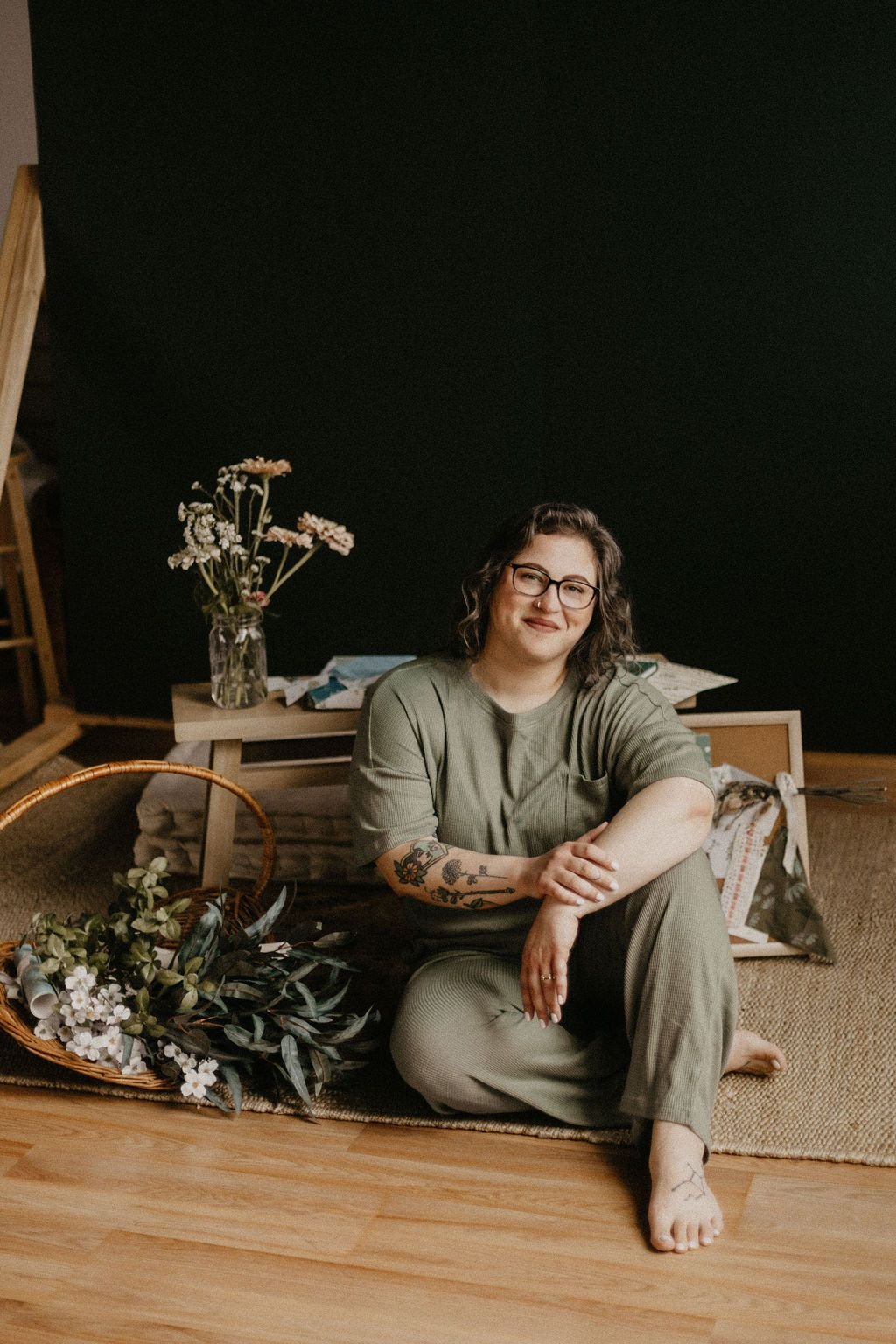
Licensing the Feral Flower patterns
Hello and Welcome
If you’ve landed here as an art director, buyer, or brand looking for timeless, painterly surface design, you’re in the right place.
At The Feral Flower, I create vintage-inspired patterns rooted in story and nostalgia. My work is especially suited for fabric, wallpaper, stationery, and heirloom-quality products. My designs feel both classic and fresh, with painterly textures and muted palettes.
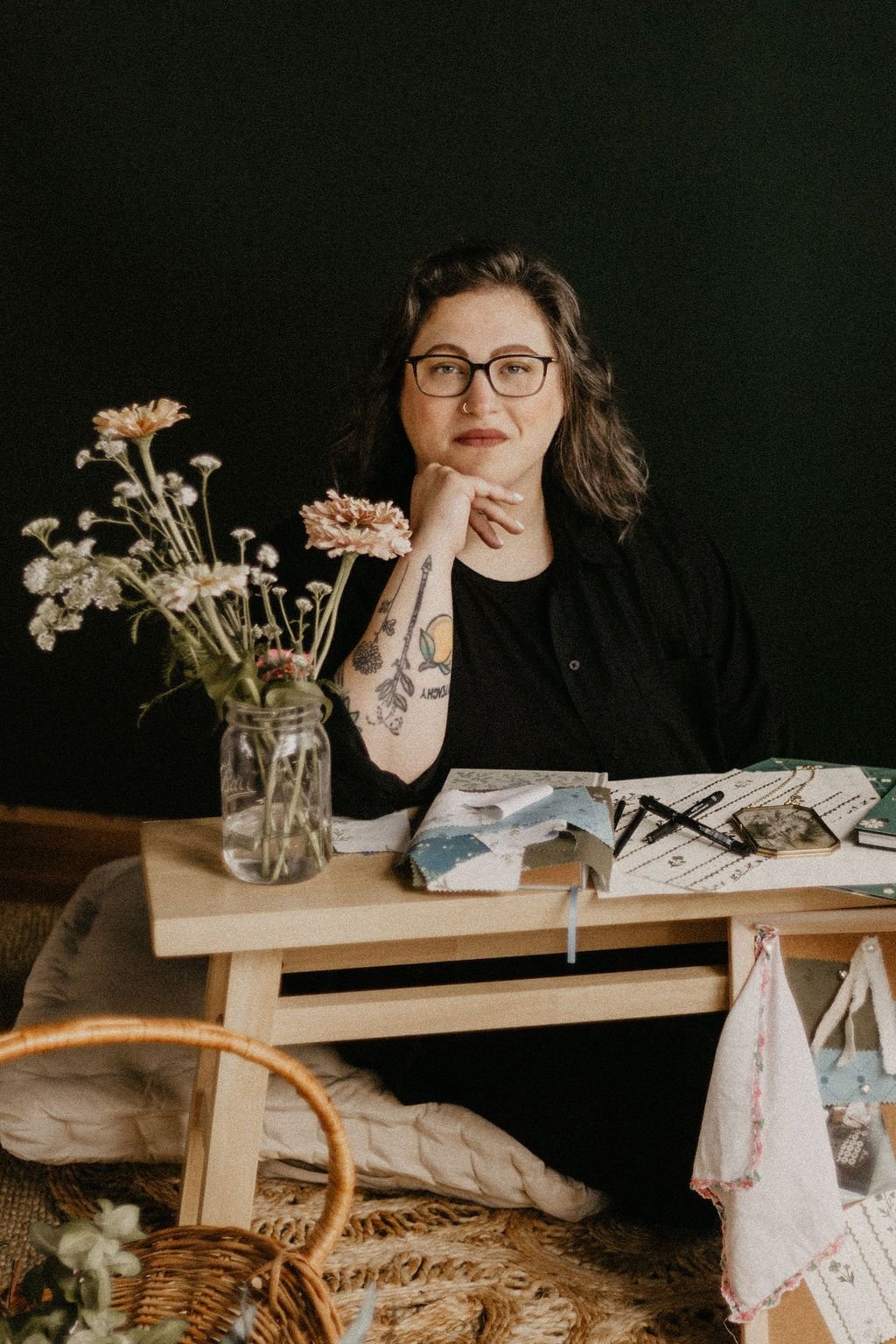
Welcome to the Feral Flower
Hello, Friend
I’m so glad you’ve found your way here. My name is Shelby Cornwell, and I’m the artist behindThe Feral Flower. This little corner of the internet is where I share the heart of my work, vintage-inspired, painterly patterns rooted in memory and story.